The 2026 Porch Piracy Epidemic: Is Your Home Targeted?
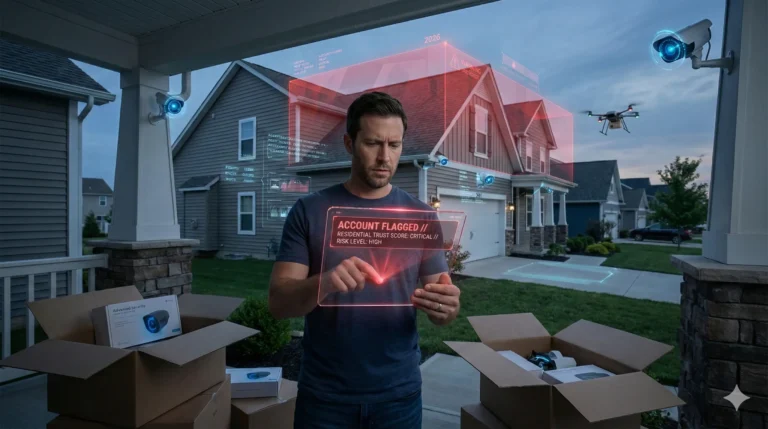
Your porch is no longer a safe zone; it’s a high-stakes target for professional theft rings. In 2026, delivery theft has evolved into a multi-billion dollar criminal industry across the U.S. Standard cameras are now ignored by thieves who know exactly how to bypass your basic security.
(Clicking these buttons will take you to this same website)
Criminals are using signal jammers and drone scouting to identify high-value deliveries in real-time. They strike within seconds of the delivery truck leaving your driveway, often before you get the alert.
This investigative report exposes the technological flaws in your current setup and how to fix them.
The following guide reveals the five most advanced tools currently available to reclaim your property. Thieves hate these devices because they move beyond simple recording into active criminal prevention.
Prepare to transform your home from a vulnerable target into an impenetrable fortress for your deliveries.
The Scouting Phase: How Thieves Pick Your Porch
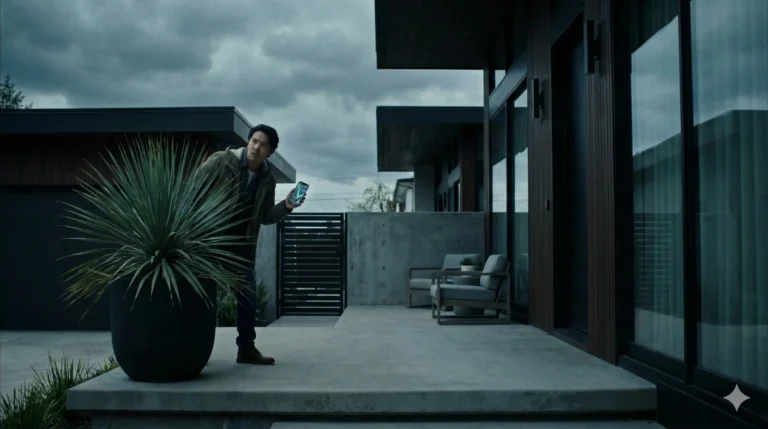
In 2026, porch pirates don’t just drive around; they use data and high-tech scouting. Thieves monitor delivery frequencies in neighborhoods to find the most profitable targets.
They look for houses with “blind spots” where they can strike without being seen by neighbors.
Most standard doorbell cameras only record the theft after it has already happened. Professional “tailgaters” follow delivery trucks and act while the driver is still on the block.
They are fast, organized, and often wear disguises that make facial recognition software useless.
Gear #1: The AI-Biometric Delivery Vault
The most effective way to stop a thief is to remove the package from their sight entirely. The 2026 AI-Biometric Delivery Vault is a secure, bolted container that sits on your porch. It uses a specialized scanner that recognizes the carrier’s digital ID or the package’s NFC tag.
Once the delivery person places the item inside, the vault locks automatically with a steel bolt.
Only you can open it using your fingerprint or a secure app on your smartphone. Thieves cannot break into these without heavy power tools, which creates too much noise and risk.
These vaults are built with reinforced composite materials that are virtually indestructible.
They also include internal sensors that alert you if someone tries to tamper with the box. By keeping the package inside a vault, you eliminate the visual “trigger” that attracts a pirate.
Gear #2: Active Deterrence 4K Sentry Systems
Passive recording is dead; 2026 demands active deterrence to stop the crime in progress.
Modern Sentry Systems use on-device AI to distinguish between a delivery driver and a thief. If someone lingers on your porch without a delivery ID, the system enters “Alert Mode.”
Immediately, a high-decibel siren sounds and strobe floodlights blind the intruder.
The system also broadcasts a pre-recorded voice message: “Police have been notified of this intrusion.” Most porch pirates flee the moment they realize they are no longer anonymous or safe.
These cameras record in 4K resolution with 60 frames per second, capturing every detail.
This data is uploaded instantly to a secure cloud, ensuring the footage cannot be destroyed. (Source: Global Security Standards Institute).
Gear #3: Neighborhood Mesh Network Drones
Neighborhoods are now fighting back together using autonomous mesh network drones.
These small, quiet drones are housed in weather-proof stations on your roof. When a delivery is detected, the drone can launch to provide an aerial view of the drop-off.
If a theft is detected, the drone follows the suspect from a safe distance while recording. The “Mesh” part means the drone can hand off the tracking to a neighbor’s drone automatically.
This creates a continuous chain of evidence that leads police directly to the suspect’s vehicle.
This technology has reduced delivery theft by over 60% in tested suburban areas. It removes the thief’s greatest advantage: the ability to disappear into the neighborhood.
The drones are fully autonomous and respect privacy by only tracking suspects in public spaces.
Gear #4: Invisible UV Forensic Marking Systems
If a thief manages to grab a package, you want to make sure they can never sell it. Invisible UV Marking Systems are the latest breakthrough in forensic security for 2026.
These systems spray an invisible, odorless, and harmless UV dye on the suspect or the package.
The dye stays on the skin and clothing for weeks and can only be seen under a blacklight. Every bottle of dye has a unique chemical signature registered to your specific home address.
When police raid “fencing” operations, they use blacklights to prove where the stolen items came from.
Thieves are becoming terrified of these systems because they carry the evidence on their bodies. It turns a “simple theft” into an airtight criminal case that is impossible to beat in court.
Many homeowners now place “UV Protected” stickers as a psychological deterrent to scaring off pirates.
Gear #5: NFC-Locked Smart Containers
For those who don’t want a permanent vault, smart fabric containers are the mobile alternative. These bags are made of slash-proof Kevlar and are anchored to your front door or a porch pillar.
They remain flat and unobtrusive until a delivery driver unlocks them via an encrypted NFC signal.
The driver places the package inside, and the bag expands to fit the item before locking.
It’s a lightweight solution that provides the same security as a heavy metal vault. (Source: E-Commerce Security Journal 2026).
These containers are perfect for renters or those who live in apartments with shared halls.
They hide the contents from view, which is the first rule of preventing “crimes of opportunity.” The locking mechanism is tested to withstand over 500 pounds of pulling force.
Strategic Defense: Why You Need Layers
Security in 2026 is about layers; one device is rarely enough to stop a determined pro. Start with an Active Deterrence camera to scare away the amateurs and teenagers. Then, use a Delivery Vault to hide the high-value items like electronics and jewelry.
Finally, ensure you are using a credit card with “Purchase Protection” for every single order. This financial layer means that even if all tech fails, your money is still protected. Most premium American Express and Chase cards offer this service automatically to their members.
Combine these tools with neighborhood awareness to create a “Hardened Neighborhood.” Talk to your neighbors about sharing drone data or UV marking protocols. A community that looks like it’s fighting back is a community that thieves will avoid entirely.
Conclusion
Porch piracy is a crime of speed and opportunity, but technology in 2026 has tipped the scales. By moving from passive cameras to active deterrence and secure vaults, you protect your assets. Don’t wait for your next high-value delivery to vanish before you decide to take action. Protecting your porch is about protecting your peace of mind in an increasingly digital world.
Frequently Asked Questions (FAQs)
1. Are AI Delivery Vaults legal in all U.S. states? Yes, these are private storage containers and are legal as long as they don’t block public paths. Check with your local HOA for any specific color or size restrictions before installation.
2. Does the UV Marking System hurt the thief? No, the forensic dye is completely harmless, odorless, and non-toxic to humans and pets. Its only purpose is to provide an invisible chemical link between the suspect and the crime scene.
3. Will delivery drivers actually use the Smart Vaults? Major carriers like Amazon, UPS, and FedEx have updated their training for these devices. Most drivers prefer them because they reduce the number of “Missing Package” claims against them.
4. How much do these 2026 security systems typically cost? A basic entry-level setup starts around $250, while a full mesh drone system can exceed $1,500. Consider it an investment that pays for itself after preventing just one high-value electronics theft.
5. Do I need a professional to install the Active Deterrence cameras? Most modern systems are designed for DIY installation with basic tools and a smartphone. However, if you are integrating drones or permanent vaults, a professional contractor is recommended.